Tools That Actually Improve Outcomes for Students and Adult Learners
Educational apps in 2025 are no longer simple classroom add-ons. For many people, they have become core learning infrastructure—used by students preparing for exams, adults upgrading job-related skills, and parents supporting structured learning at home.
However, most “best app” lists still focus on popularity or flashy features rather than the only question that really matters:
Which educational apps reliably turn study time into measurable skill improvement?
This guide reviews 50 of the best educational apps in 2025, not as a random directory, but as a decision-oriented toolkit. The goal is to help learners and decision-makers build a high-ROI learning stack aligned with outcomes, budget, and real-world study constraints.
How We Evaluated Educational Apps (Outcomes, Evidence, ROI)
An effective educational app is not defined by a polished interface. It is defined by skill transfer per minute spent.
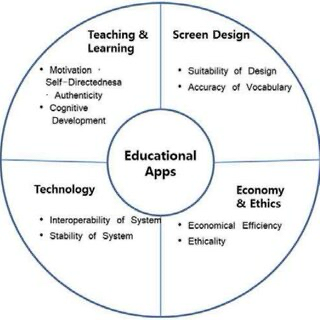
Apps in this review were evaluated using five practical criteria:
Learning science alignment Retrieval practice, spaced repetition, and immediate feedback.
Content validity Curriculum alignment, expert authorship, and low error rates.
Adaptivity Diagnostics, personalized learning paths, and progress tracking.
Workflow fit Cross-device access, offline support, and accessibility features.
Total cost of ownership Subscription tiers, family plans, and long-term value.
Research consistently shows that purposeful, goal-driven technology use improves learning outcomes, while unfocused screen time does not. The best apps support disciplined practice rather than distraction.
The 50 Best Educational Apps (Grouped by Learning Goal)
Below are 50 standout educational apps, grouped by use case. Treat them as modular tools, not a bundle to use all at once.
Goal: Learn a language for exams and real communication
Stack: Babbel or Busuu + ELSA Speak + HelloTalk
Focus: Structured input, pronunciation feedback, and output practice.
Goal: Write better essays and avoid plagiarism
Stack: Google Scholar + Zotero + Google Docs + Grammarly
Focus: Source quality, citation discipline, and clarity.
Goal: Study efficiently with limited time
Stack: Quizlet + Notion or OneNote + Freedom
Focus: Retrieval, structured summaries, and distraction control.
Limit stacks to three tools per term. More tools usually reduce consistency.
Buying Guide: Matching Apps to Budget and Curriculum
Before subscribing, apply this checklist:
Does the app clearly measure progress?
Does it reduce or increase cognitive load?
Is there visible improvement after four weeks?
Does it replace, rather than duplicate, another tool?
For families and adult learners alike, fewer tools used consistently outperform large collections.
Conclusion
The best educational apps in 2025 are not the most popular or visually impressive. They are the ones that convert time into measurable mastery through diagnostics, retrieval, feedback, and focus.
Treat educational apps as learning infrastructure, not entertainment. Build a lean stack, test it over two weeks, keep what delivers progress, and discard the rest.
Returning to school after 30 is not primarily a motivation challenge. Research across education, labor economics, and cognitive science shows that outcomes for adult learners depend on alignment—between credentials and labor-market demand, study design and adult cognition, time constraints and program flexibility, and financing choices and opportunity cost.
This article synthesizes evidence-based insights to help adult learners evaluate ROI, choose resilient learning pathways, and design study systems that survive real life.
Back to School After 30: Research-Driven Strategies for Adult Learners Who Need ROI, Not Inspiration
Introduction At 30+, returning to education is less a “fresh start” than a high-stakes investment decision. You’re balancing opportunity cost, family logistics, identity shifts, and the non-negotiable question: will this credential pay off in earnings, stability, and mobility? The research is clear: adult learners often outperform younger peers in persistence when programs match their constraints—yet they also face higher dropout risk when finances, scheduling, and support systems misalign. In the U.S., roughly one-third of college students are 25+, and globally, mid-career upskilling has become policy-critical as automation reshapes job ladders. The adult-learning advantage is not raw time or energy; it’s clarity. You know why you’re enrolling—and that purpose, paired with evidence-based study design, can beat youthful stamina. This guide distills research insights into a practical blueprint: selecting programs with measurable labor-market returns, building a schedule that survives real life, and using adult cognition to learn faster, not longer.
1) The Adult Learner’s Advantage: How 30+ Brains Learn Differently (and Better) Adult learning is not “late”; it’s different. Cognitive research shows crystallized intelligence—pattern recognition, vocabulary, domain knowledge—tends to remain strong into midlife, while processing speed can decline. That trade-off favors strategies built on depth, retrieval, and application rather than passive review. A landmark meta-analysis by Dunlosky and colleagues found practice testing and distributed practice among the **highest-utility learning techniques, consistently outperforming rereading and highlighting. For adult learners, that’s good news: you can convert limited hours into durable mastery by choosing high-yield methods.
Data points add urgency. In the U.S., the National Center for Education Statistics reports about one-third of undergraduates are 25+, and millions more engage through short courses and professional certifications. OECD surveys show adult participation in training varies widely—Nordic countries often lead, while participation is lower in several southern/eastern European contexts—suggesting that structured support, not motivation alone, determines uptake. Meanwhile, Coursera’s Global Skills reports continue to show strong employer demand for data, cloud, and cybersecurity skills—fields where competency-based learning can outpace traditional seat time.
Actionable tips grounded in learning science: – Design “retrieval blocks,” not study blocks. Spend 20 minutes answering questions from memory before reviewing notes; use flashcards that force recall (not recognition). – Use spacing with a calendar, not willpower. Schedule three short sessions across the week; distributed practice beats weekend marathons. – Study at the level of application. Convert each topic into “work-like” tasks: explain a concept to a colleague, solve a case, draft a memo, build a spreadsheet model. – Exploit your experience. Adults learn faster when new knowledge hooks into existing schemas—actively map each concept to something you’ve done at work.
2) Choosing the Right Path: Credentials, Labor-Market Returns, and Global Program Models Adult learners don’t need more options; they need better filtering. The key question is: what credential yields the highest probability of measurable career outcomes—promotion, sector switch, salary growth—given your constraints? Research on returns to education consistently shows variation by field, institution quality, and completion. Completion matters disproportionately for adults: stop-out risk rises when programs are rigid, advising is weak, or financial stress spikes.
Consider how different countries structure adult pathways: – Germany:The dual system and strong vocational culture normalize mid-career upskilling, with industry-recognized qualifications and employer-linked training. – Australia: Robust Technical and Further Education (TAFE) pathways provide applied credentials aligned to workforce needs; many programs are modular and flexible. – Singapore: Skills-focused national initiatives (e.g., widely publicized credit-based upskilling models) reduce the financial barrier to career switching. – United Kingdom: Degree apprenticeships and part-time routes offer earn-while-you-learn options, particularly valuable for adults with dependents. – India:Rapid growth in online upskilling and industry certificates has broadened access, though outcomes vary sharply by provider credibility and employer recognition.
Case studies (compressed but real-world representative): 1) Canada (Ontario):A 38-year-old retail supervisor enters a one-year college graduate certificate in supply chain. Outcome: a logistics coordinator role within 6–9 months, using capstone projects as portfolio proof. Insight: applied programs with employer partnerships reduce “experience gap.” 2) Kenya (Nairobi):A 33-year-old admin professional completes a blended HR certification plus Excel/data reporting micro-credential. Outcome: internal promotion to HR operations. Insight: stacking short credentials can unlock progression without full degree timelines. 3) Spain (Madrid): A 41-year-old hospitality worker transitions via vocational training in digital marketing. Outcome: junior performance-marketing role, aided by internship placement. Insight: structured placement channels often matter more than course content alone.
Decision rules for selecting programs: – Prefer credentials with external signaling: licensing, accredited degrees, or widely recognized industry certifications. – Demand transparent outcomes: placement rates, median salary data, or employer partners. – Choose stackable pathways: certificates that ladder into diplomas or degrees, so progress is never wasted.
3) Time, Energy, and Family Logistics: A Research-Backed Study System That Survives Reality Adult learners don’t fail because they lack grit; they fail because they rely on motivation instead of systems. Behavioral research shows habit formation is environment-dependent: reduce friction, increase cues, and keep tasks small enough to execute on bad days. Your goal is not an ideal week—it’s a resilient default.
Start with a workload audit. Many adult learners have 10–15 usable study hours per week, not 25. Design around that truth: – Micro-sessions (25–40 minutes) beat long sessions for consistency and retention, especially when paired with retrieval practice. – Use implementation intentions (“If it’s 7:30 p.m., then I open the quiz bank for 20 minutes”) to increase follow-through. – Protect sleep. Sleep research is unambiguous: memory consolidation and cognitive control suffer with chronic sleep restriction, which raises dropout risk through poor performance and emotional volatility.
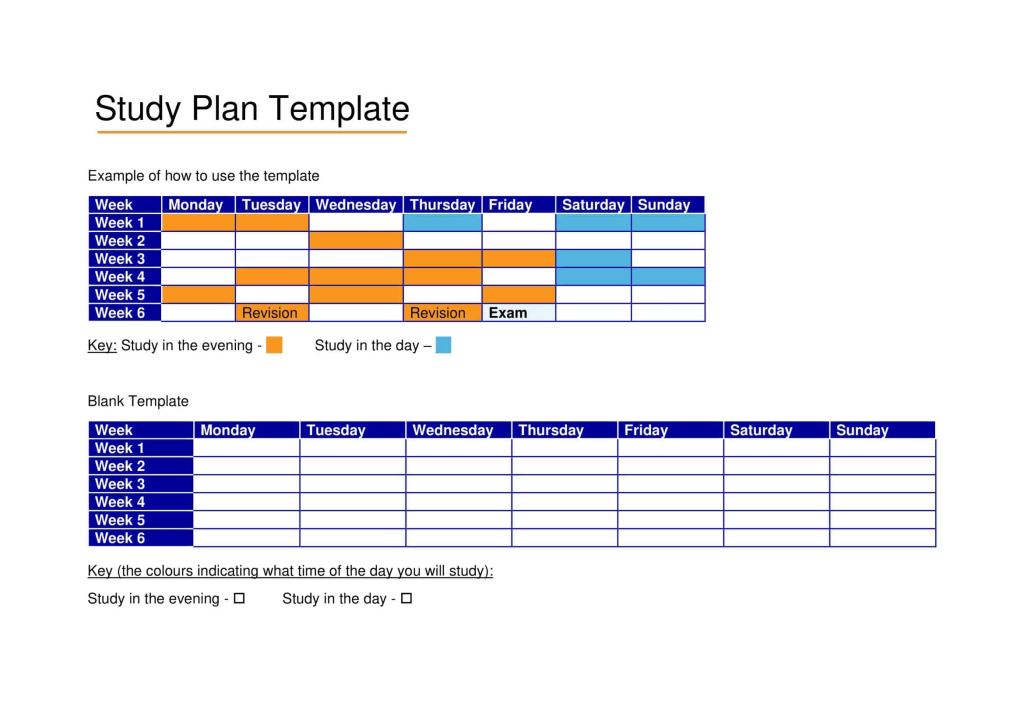
Practical scheduling framework (example): – Mon/Wed/Fri: 30 minutes retrieval + practice problems. – Tue/Thu: 40 minutes project work (assignments, drafts, coding). – Weekend: 60–90 minutes consolidation: mock test + review errors + plan next week.
Tools and tactics that work internationally: – Commute learning (Japan, UK): audio summaries, flashcards, and spaced repetition apps; avoid passive podcasts as your primary method. – Childcare swaps (U.S., Brazil): co-op childcare with another student-parent for two focused sessions weekly. – Employer learning agreements (Germany, Singapore): negotiate protected study time tied to role-relevant outcomes.
Examples of “anti-dropout” design: – Replace “read Chapter 6” with “answer 20 questions on Chapter 6; log weak areas.” – Use a two-list system: “Must-do (30 minutes)” and “Bonus (60 minutes).” On chaotic days, you still win.
4) Money and ROI: Funding Options, Opportunity Cost, and How to Avoid High-Debt Mistakes Financing is the adult learner’s make-or-break variable. Research across higher education consistently finds financial stress correlates with stop-outs and delayed completion. Treat funding as a strategy, not an afterthought.
Key data points to anchor decisions: – In the U.S.,student loan balances exceed $1.7 trillion (Federal Reserve-reported magnitude), and repayment burden can constrain career choices—especially for older borrowers with mortgages or dependents. – World Bank and OECD analyses repeatedly show **returns vary sharply by level and field; STEM, health, and certain business/tech credentials often yield stronger wage premiums than low-signal degrees with weak labor-market alignment. – Employer-sponsored education is rising in many markets; where available, it is often the cheapest capital you can access because it reduces borrowing and signals internal mobility pathways.
Funding checklist (high-impact, globally adaptable): 1) Employer tuition assistance: Present a business case—skills mapped to KPIs (revenue, risk reduction, automation). 2) Government subsidies: Many countries offer mid-career grants, training credits, or subsidized vocational routes (examples include Singapore-style credits and various EU-funded reskilling programs). 3) Income-share or deferred tuition models:Evaluate carefully; compare effective cost to traditional loans and read repayment caps. 4) Community college / polytechnic pathways:Often lower cost with strong applied outcomes; in many regions, articulation agreements allow later degree completion. 5) Scholarships for mature students: Less visible than school-leaver awards, but common in professional schools and nonprofit initiatives.
Key takeaways to avoid costly mistakes: – Don’t borrow for a credential with unclear employer demand or weak placement support. – Prefer programs that produce portfolio artifacts (projects, clinical hours, internships). – Calculate ROI with conservative assumptions: expected salary uplift, time-to-credential, and probability of completion given your constraints.
5) High-Performance Execution: Evidence-Based Study Habits, Assessment Tactics, and Career Translation Completion is not just persistence; it’s skillful execution. Adult learners succeed when they align learning tactics to assessment formats and translate coursework into employable proof.
Assessment tactics that raise grades (and reduce time): – Exam wrappers: After each test, analyze errors by category (conceptual gap, misread question, time management). This metacognitive loop is associated with improved performance over time. – Interleaving: Mix problem types rather than blocking by topic; research shows it improves discrimination and transfer—critical in math, stats, coding, and languages. – Deliberate practice: Identify the smallest subskill, practice with feedback, then repeat. Adults often skip this and “study around” weaknesses.
Career translation—where most adults leave value on the table: – Convert assignments into a portfolio: a dashboard, policy brief, lesson plan, case write-up, or GitHub repo. Employers hire evidence. – Build a skills narrative: “I used X tool to solve Y problem with Z impact.” This is especially powerful for career changers. – Use informational interviews strategically: 3 conversations per month across your target roles; ask what projects prove competence fastest.
Actionable recommendations (tight and high-leverage): – Week 1: Choose one flagship outcome (credential + target role). Write a one-paragraph ROI thesis: cost, timeline, expected uplift, backup options. – Weeks 2–4: Build a study system with retrieval practice and spacing; track hours and quiz accuracy, not pages read. – Month 2 onward:Produce one portfolio artifact per course; publish a sanitized version online if appropriate. – Every term: Reassess program-market fit using job postings: required skills, tools, and credentials.
Adults often underestimate a final advantage: you can network with intention. You already have credibility, professional references, and context—assets younger students are still building.
Conclusion Going back to school after 30 is a rational, research-backed move when you treat education as an ROI-driven project: pick credentials with labor-market signal, finance them intelligently, and study using high-yield methods like retrieval practice and spacing. Adult learners win by designing systems that survive real life—micro-sessions, portfolio-first coursework, and employer-aligned outcomes. If you’re ready, start with one decision this week: identify the credential that maps cleanly to a role you can name, in a market you’ve verified through job postings. Then build the smallest sustainable study routine and let consistency compound.
Re-reading textbooks and notes is one of the most common study strategies used by students worldwide. It feels productive, familiar, and low-effort. Many learners assume that repeated exposure to information naturally leads to better understanding and memory.
However, decades of research in cognitive psychology suggest otherwise. While re-reading can increase short-term familiarity, it is one of the least effective strategies for long-term learning and knowledge retention.
This article explains why re-reading feels helpful but often fails, what cognitive science reveals about how memory actually works, and which evidence-based strategies are far more effective for durable learning.
Why Re-Reading Feels Effective (But Isn’t)
Re-reading creates a sense of fluency. As the material becomes more familiar, the brain interprets this ease as understanding. Psychologists call this phenomenon the illusion of competence.
In reality:
Familiarity ≠ mastery
Recognition ≠ recall
Ease of reading ≠ ability to retrieve information later
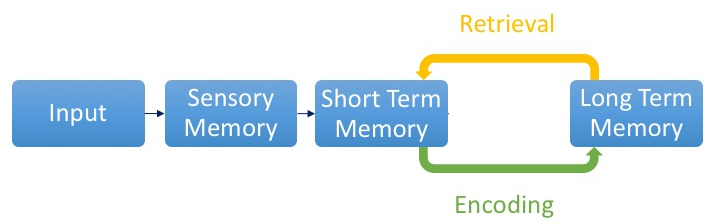
When students re-read, they often confuse recognition (“This looks familiar”) with retrieval (“I can recall this without help”). Exams, problem-solving, and real-world application all depend on retrieval—not recognition.
What Research Says About Re-Reading
A landmark review by Dunlosky et al. (2013), published in Psychological Science in the Public Interest, evaluated ten popular learning strategies. Re-reading ranked low in effectiveness, especially for long-term retention.
Key findings include:
Re-reading produces minimal gains beyond the first pass
Benefits are short-lived and fade quickly
It does not improve transfer of knowledge to new contexts
In contrast, strategies that require active mental effort consistently outperform passive review methods.
The Core Problem: Re-Reading Avoids Retrieval
Memory strengthens when it is retrieved, not when it is passively observed.
Re-reading allows learners to:
Keep answers visible
Avoid errors
Avoid mental struggle
But cognitive science shows that struggle is not a bug—it’s a feature. The effort involved in pulling information from memory is what reinforces neural pathways.
This is known as the testing effect: attempting to recall information improves learning more than additional study.
Why Highlighting and Re-Reading Often Go Together
Highlighting frequently accompanies re-reading, yet research shows similar limitations.
Common issues include:
Over-highlighting without discrimination
Passive engagement with text
No requirement to generate or explain ideas
Unless highlighting is followed by active processing (such as summarizing or self-testing), it rarely improves understanding or retention.
Evidence-Based Alternatives That Work Better
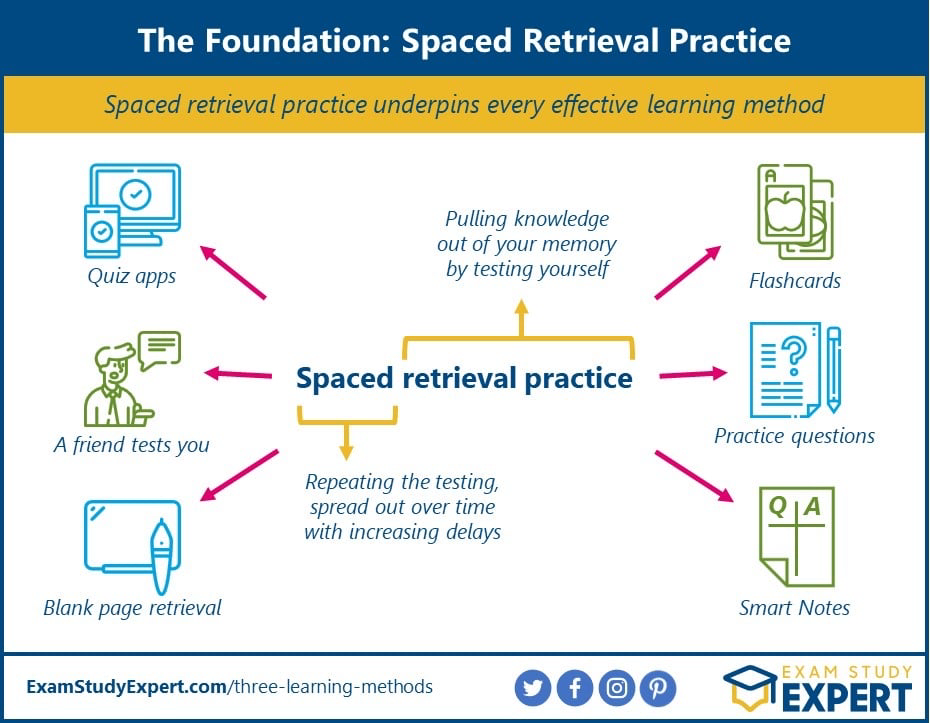
1. Retrieval Practice
Instead of re-reading, learners should regularly ask:
“What can I remember without looking?”
“Can I explain this in my own words?”
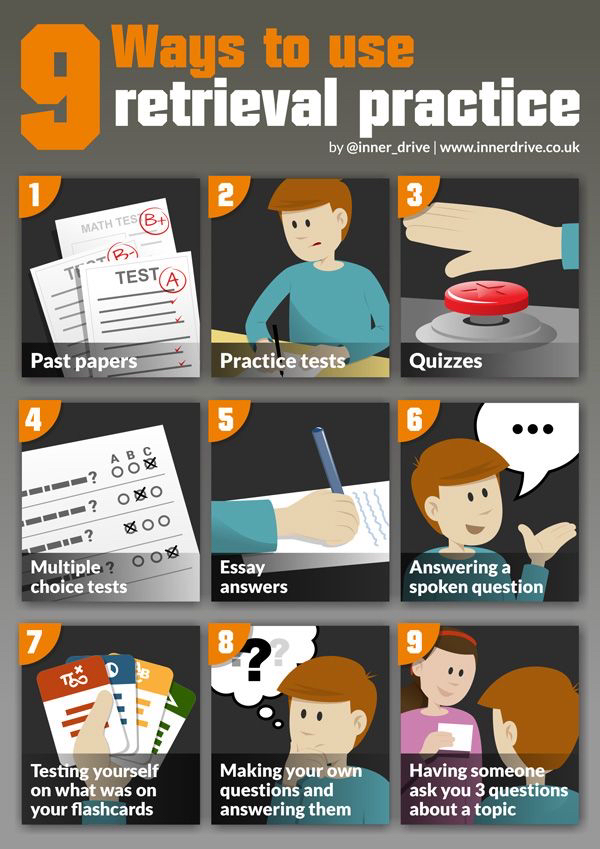
Effective retrieval methods include:
Practice questions
Flashcards
Writing brief summaries from memory
Even incorrect attempts strengthen learning by revealing gaps.
2. Spaced Practice
Spreading study sessions over time dramatically improves retention compared to massed study (cramming or repeated re-reading).
Spaced practice works because it:
Forces repeated retrieval
Introduces desirable difficulty
Prevents overconfidence
This approach aligns with how memory consolidates over time.
3. Elaboration and Explanation
Learners retain more when they actively connect new information to existing knowledge.
Examples include:
Explaining concepts as if teaching someone else
Creating analogies
Asking “why” and “how” questions
These strategies deepen understanding and improve transfer to new problems.
When Re-Reading Can Still Be Useful
Re-reading is not entirely useless. It can help when:
Introducing completely new material
Clarifying confusing sections
Reviewing structure before active practice
However, it should serve as a preparation step, not the primary study strategy.
Practical Study Framework (Research-Aligned)
A more effective approach looks like this:
Initial exposure – Read once for comprehension
Active recall – Close the material and retrieve key ideas
Feedback – Check accuracy and fill gaps
Spacing – Revisit after time has passed
This cycle aligns with how learning actually occurs.
Conclusion
Re-reading feels productive because it is easy and familiar—but learning is not built on ease. Cognitive science consistently shows that active, effortful strategies outperform passive review for long-term retention and understanding.
Students who replace excessive re-reading with retrieval practice, spacing, and explanation learn more efficiently and retain knowledge longer.
Effective learning is not about spending more time—it’s about using strategies that work with the brain, not against it.