A Risk-Based Comparison for Adults Switching Careers
For adults considering a career change, the question is often not “What sounds more exciting?”
It is much more practical:
Which option is safer if this transition does not go exactly as planned?
Online degrees and bootcamps are two of the most common reskilling paths for career changers. Both promise faster access to new roles, but they differ significantly in risk exposure, fallback options, and long-term stability.
This guide compares online degrees vs bootcamps from a risk-management and ROI perspective, helping adult learners make a decision that minimizes downside—not just maximizes upside.
What Is an Online Degree?
An online degree is a formal academic credential offered by an accredited institution, delivered partially or fully online. Common options include bachelor’s and master’s degrees in fields such as business, IT, healthcare administration, or data analytics.
According to the U.S. National Center for Education Statistics (NCES), online degree enrollment among adult learners has steadily increased over the past decade, driven largely by working professionals seeking career mobility without leaving the workforce.
Key characteristics:
- Accredited and widely recognized by employers
- Longer time commitment (typically 2–4 years)
- Higher upfront cost, but broader credential value
What Is a Bootcamp?
A bootcamp is an intensive, short-term training program focused on job-ready skills, most commonly in technology-related fields such as software development, data analytics, or UX design.
Research summarized by workforce studies from organizations such as Brookings Institution and OECD notes that bootcamps aim to compress skill acquisition into weeks or months, often emphasizing practical output over theory.
Key characteristics:
- Short duration (typically 3–6 months)
- Narrow skill focus
- Variable recognition depending on employer and industry
Online Degree vs Bootcamp: Core Differences That Matter
1. Time Commitment
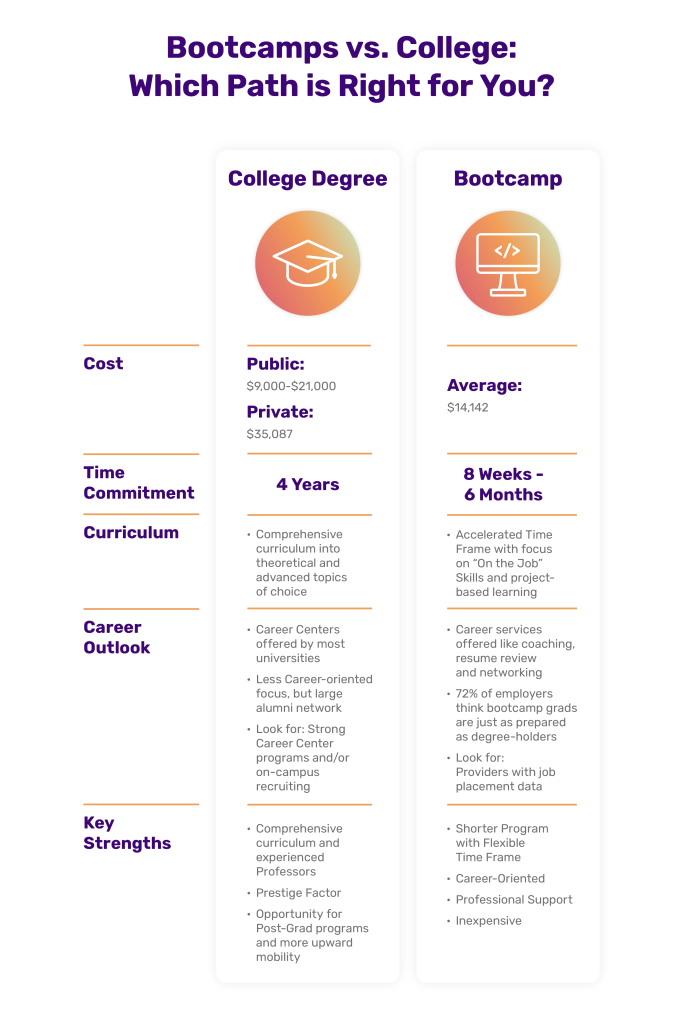
- Bootcamp: Faster entry, shorter timeline
- Online degree: Slower, but more flexible pacing
Bootcamps favor speed; degrees favor sustainability.
2. Credential Durability
According to labor market research referenced by Georgetown University’s Center on Education and the Workforce, degrees tend to retain value across economic cycles, while short-term credentials are more sensitive to market shifts.
If demand for a specific skill declines, a degree still signals general capability. A bootcamp certificate may not.
3. Employer Recognition
Data from BLS Occupational Outlook Handbook indicates that many roles—especially in regulated or managerial tracks—explicitly require a degree, regardless of skill level.
Bootcamps may be sufficient for entry-level or skill-specific roles, but degrees offer broader eligibility.
Which Option Is Safer for Career Changers?
From a risk perspective, “safer” means:
- Lower chance of being locked out of roles
- More fallback options if the first job search fails
- Better long-term adaptability
Why Online Degrees Are Generally Safer
- Recognized across industries
- Compatible with future certifications or advanced study
- Less dependent on short-term hiring trends
When Bootcamps Can Still Make Sense
Bootcamps may be appropriate when:
- You already have adjacent experience
- You are targeting a narrow role with clear demand
- You can absorb the risk of limited credential portability
ROI Timeline: Degree vs Bootcamp
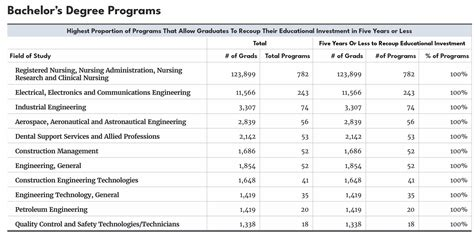
Studies cited by OECD Skills Outlook and Georgetown CEW suggest:
- Bootcamps: Potential faster short-term ROI, but higher variance
- Online degrees: Slower initial ROI, but more consistent long-term outcomes
Career changers who prioritize stability often accept slower payback in exchange for reduced downside risk.
For a broader framework on degree and credential ROI, see
Online Degree vs Professional Certification: Which Pays Off Faster?
How This Decision Fits Into a Bigger Learning Strategy
Many adult learners do not choose one path exclusively. A common, lower-risk sequence is:
- Build foundational credibility with an online degree
- Add targeted certifications or short-term training later
This layered approach aligns with findings from OECD and World Bank research on adult reskilling, which emphasize adaptability over single-solution training.
For a full overview of how these paths fit together, see
Online Learning for Adults: Degrees, Certifications & Career ROI.
Common Mistakes Adults Make When Choosing Bootcamps
Adult education research frequently highlights these pitfalls:
- Overestimating job placement guarantees
- Underestimating employer credential requirements
- Ignoring long-term career ceilings
- Treating speed as the primary decision factor
Speed can be valuable—but only when paired with realistic expectations.
Final Verdict: Degree or Bootcamp?
There is no universally correct answer. However, for most risk-aware career changers, the evidence suggests:
- Online degrees are safer due to credential durability and broader recognition
- Bootcamps are riskier, but can work in specific, well-aligned scenarios
Career change is not a sprint. It is a controlled transition.
Choose the option that leaves you with the most flexibility if plans change.